Supporting children, young people and families through PANS/PANDAS
I offer psychological support for children, young people and families affected by PANS/PANDAS. Through my clinical work, charity involvement and listening closely to families, I understand how sudden changes in anxiety, OCD symptoms, mood, behaviour and everyday functioning can feel frightening and overwhelming — not only for the child, but for parents and carers too.
Psychological support can sit alongside medical care and may be helpful at different points in a family’s journey.
When things are unclear
Families may be trying to make sense of sudden or significant changes while also navigating uncertainty about what is happening. Support can help children and parents understand patterns of distress, think about what the child can realistically manage, and consider ways of responding when everyday life has become more difficult or unpredictable. Where appropriate, I can also help families think about whether further assessment, referral or liaison with other professionals may be helpful.
Following diagnosis
A diagnosis can bring relief and validation, but also new questions. Therapy can help children and families make sense of what they have experienced, understand and respond to the changes in thoughts, emotions, behaviour and everyday functioning that may have come with PANS/PANDAS, rebuild confidence and routines, and think about what may be helpful next.
During a flare
A child’s ability to engage can change considerably during a flare. Psychological support can help families respond to PANS/PANDAS symptoms while supporting connection and day-to-day functioning. Therapy therefore needs to be flexible and responsive to the child’s needs, preferences and current capacity. At times this may mean reducing demands, focusing more on safety and connection, or working more closely with parents. At other times, a child may be ready for a small therapeutic step forward. Just as families may need to adapt how they support a child during a flare, therapy may also need to change in response to the child’s current symptoms, needs and capacity.
As things begin to improve
Recovery can happen, and many children and families are able to gradually rebuild confidence, routines, relationships and participation in everyday life. For some, progress may not always be a straightforward return to how things were before. Psychological support can help children and families process what they have experienced, rebuild at a manageable pace and think about what might help if difficulties increase again.
Support for parents and carers
Parent consultation can be helpful whether or not a child is currently receiving therapy themselves. It can provide space to think through difficult situations, understand what may be happening, and consider different ways of responding.
Where helpful, I can also liaise with schools or other professionals involved in a child’s care.
There is no single psychological approach that will suit every child with PANS/PANDAS. I have found that support needs to take account of a range of factors, including a child’s developmental stage, possible neurodevelopmental profile, symptoms, preferences, family context and what they are able to manage at that particular point in time. Therapy may therefore look quite different from one child to another, and may need to adapt as their needs and capacity change.
If you are unsure whether psychological support may be helpful, please do get in touch. We can arrange a free 15-minute initial phone call to think together about what may be most appropriate for your child and family.

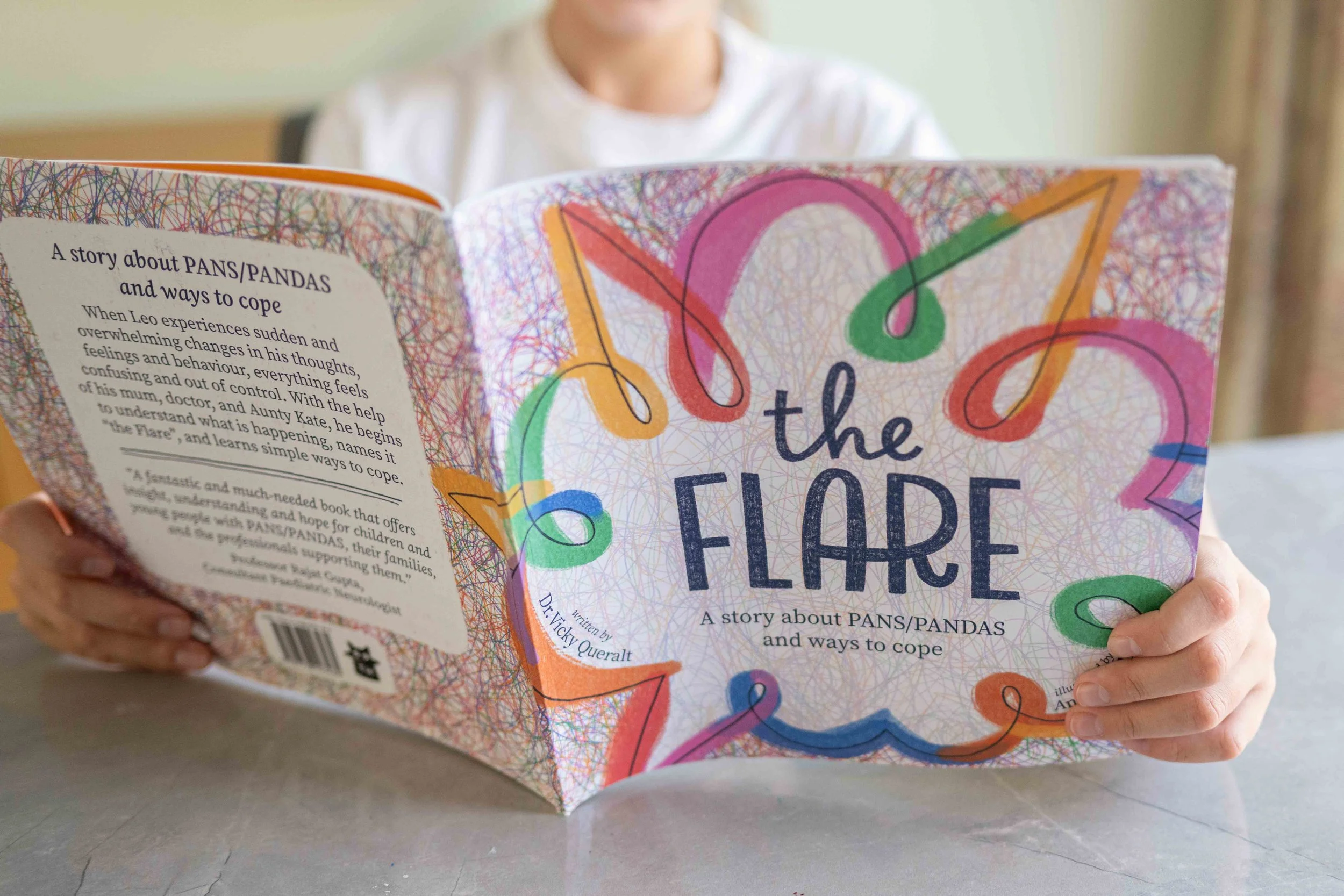
The Flare: A story about PANS/PANDAS and ways to cope
Written by Dr Vicky Queralt Illustrated by Anna Edgell
A child-friendly story for children around 8–12 years old, designed to help make sense of PANS/PANDAS and some of the thoughts, feelings and changes it can bring.
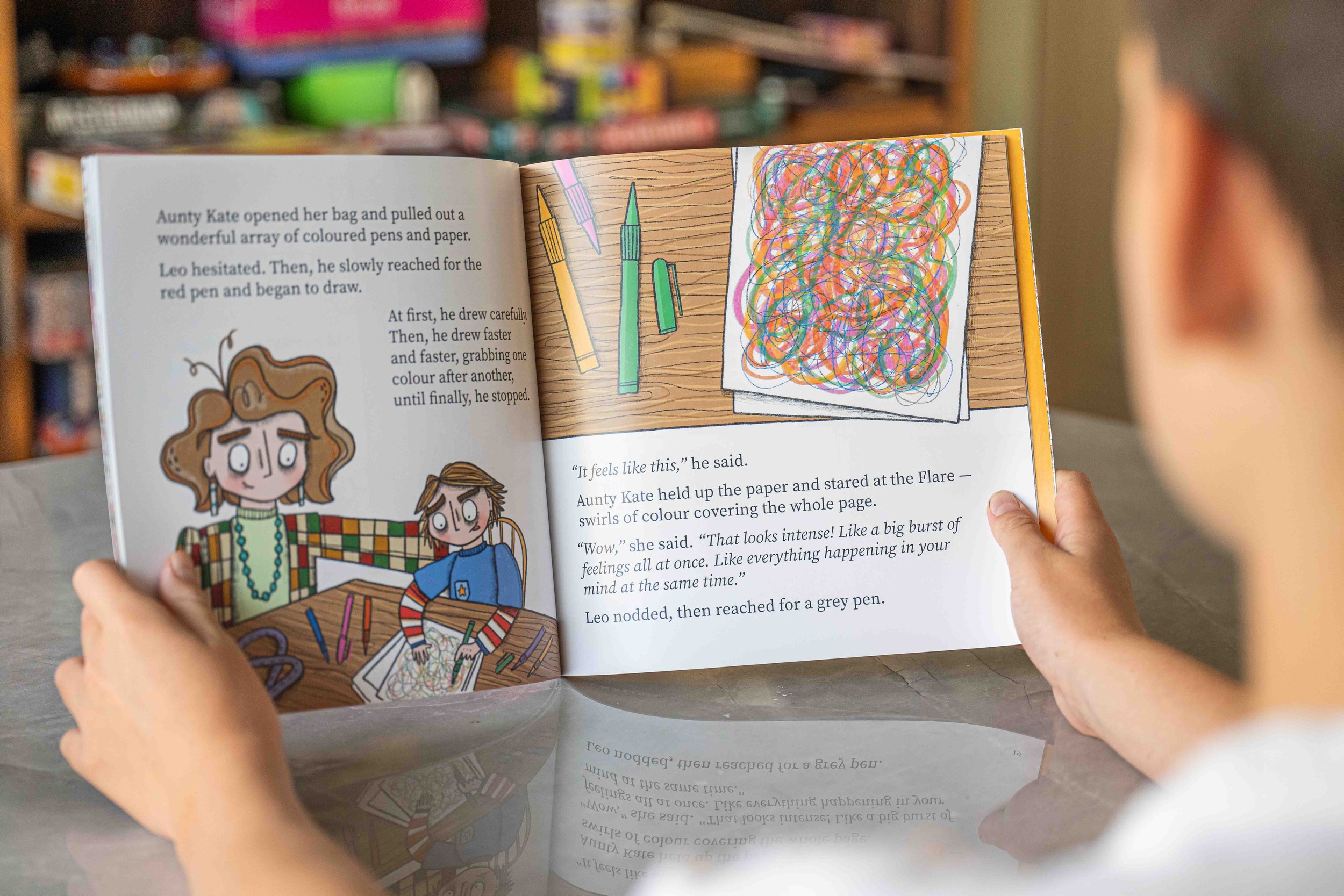
The story follows Leo as he experiences a flare, with practical coping ideas woven through the book, alongside a personalised Flare Survival Guide at the end.
Find out more: The Flare Book
Resources for Families
Reconnecting After a Flare
PANS/PANDAS can bring sudden and unexpected changes in behaviour, mood and everyday family life. This can be incredibly hard for the child and can also leave parents, carers and siblings feeling exhausted or overwhelmed.
This resource shares practical ideas to help families reconnect with their child and with each other, and begin to rebuild a sense of understanding and safety at home.
Developed in collaboration with PANS PANDAS UK, the ideas can be adapted in ways that feel right for each family.
You can download the resource as a free PDF here. Printed copies are also available to buy through the PANS PANDAS UK charity shop, here, with proceeds supporting the charity’s work. The printed copy also includes a Reconnection Family Plan, with space for families to add their own ideas and make the resource personal to them.
Reconnecting After a Flare family support resource
Parenting Strategies Webinar
This webinar was created for PANS PANDAS UK and recorded as part of their online parenting support conference.
It explores why parenting can feel so difficult when a child is experiencing PANS/PANDAS and shares practical ideas for navigating some of the more challenging moments. It also looks at uncertainty, noticing what a child may be able to manage at the time, and looking after your own wellbeing alongside supporting your child.
The focus is on finding small, manageable ways forward rather than feeling pressure to get everything back to normal quickly.
Ask the Experts – PANS PANDAS UK Youth Board
Children and young people from the PANS PANDAS UK Youth Board put their questions about PANS/PANDAS to a panel of professionals. I joined the panel to answer some of their questions and talk about the things that may help young people and families as they navigate PANS/PANDAS.
Professional Contributions
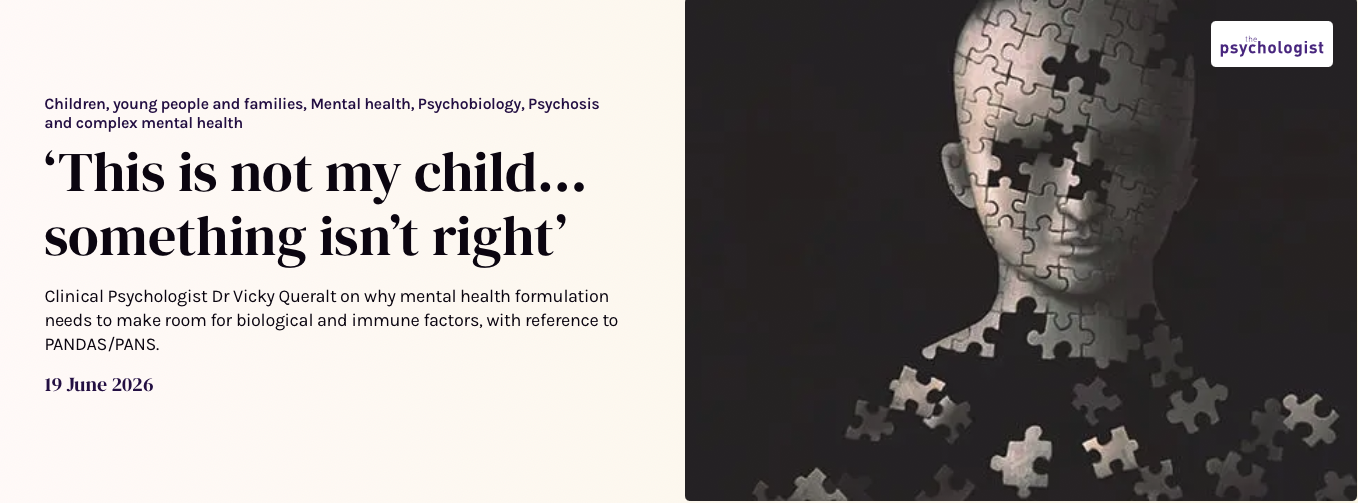
“This Is Not My Child… Something Isn’t Right” – The Psychologist
Alongside my clinical work, I am passionate about raising awareness of PANS/PANDAS, particularly within mental health services, and contribute to this through my role as a trustee of PANS PANDAS UK.
I wrote this article for The Psychologist to encourage psychologists and other professionals to stay curious when a child’s presentation does not quite fit the usual picture. It reflects on the importance of keeping formulation open, thinking about the links between physical and mental health, and listening carefully to families when they say that something has changed.
It also considers whether illness, infection, inflammation or immune-related processes may sometimes need to be part of the wider clinical picture when thinking about children affected by PANS/PANDAS.
You can read the article here.